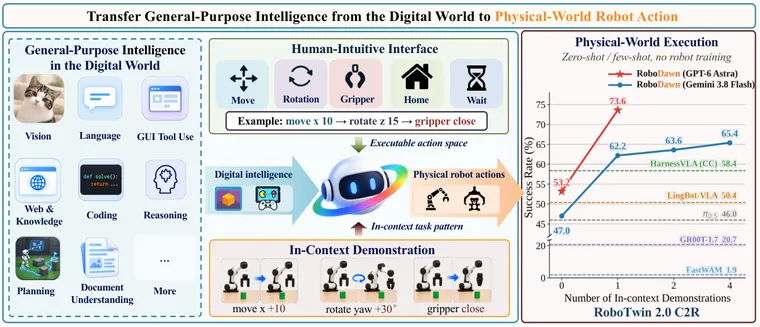
Transferring the Intelligence of VLMs to Robotic Control
arXiv preprint, 2026
Studies whether the intelligence of vision-language models can carry over from the digital world to physical robotic control.
Studies whether the intelligence of vision-language models can carry over from the digital world to physical robotic control.
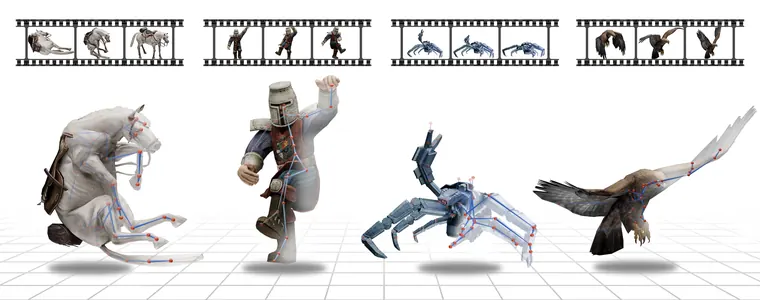
Captures motion from monocular video and retargets it onto characters with arbitrary, unseen skeletal topologies, from bipeds to hexapods, without test-time optimization.
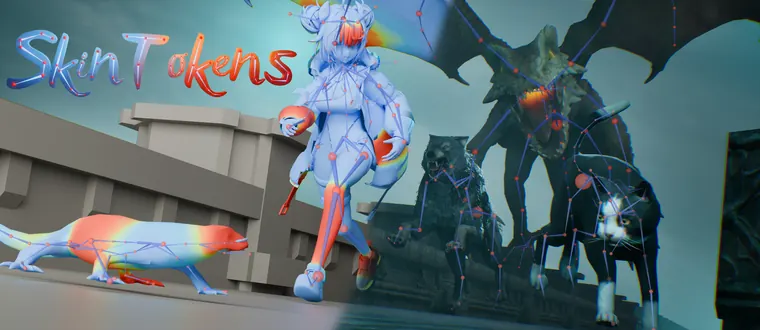
A discrete, compact representation of skinning weights that turns rigging into token prediction, unifying skeleton and skinning generation in one autoregressive model.
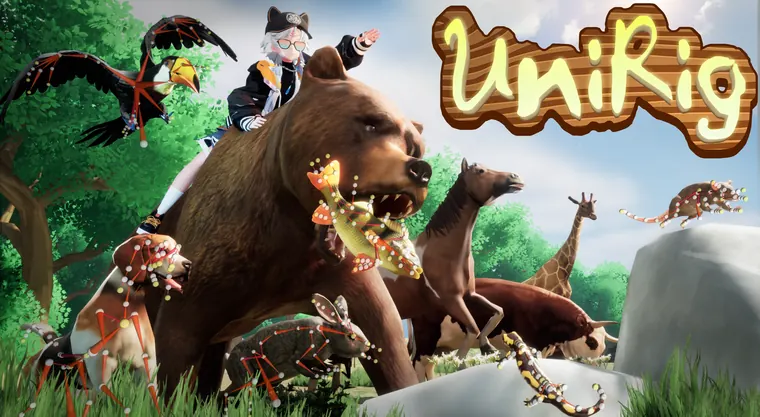
A single model that automatically rigs diverse 3D assets, from humans and animals to inanimate objects, with skeletons and skinning weights.
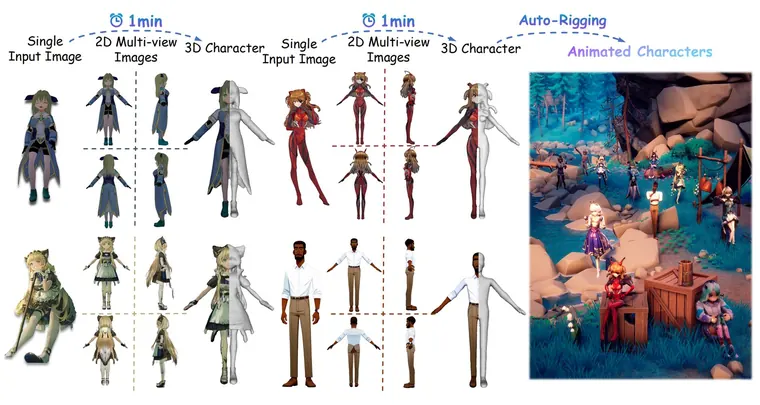
Generates a pose-canonicalized 3D character mesh from a single image, ready for downstream rigging and animation.